
百家讲坛
A mountain standing for millennia finds new ways to tell its story online_我的网站

一 |

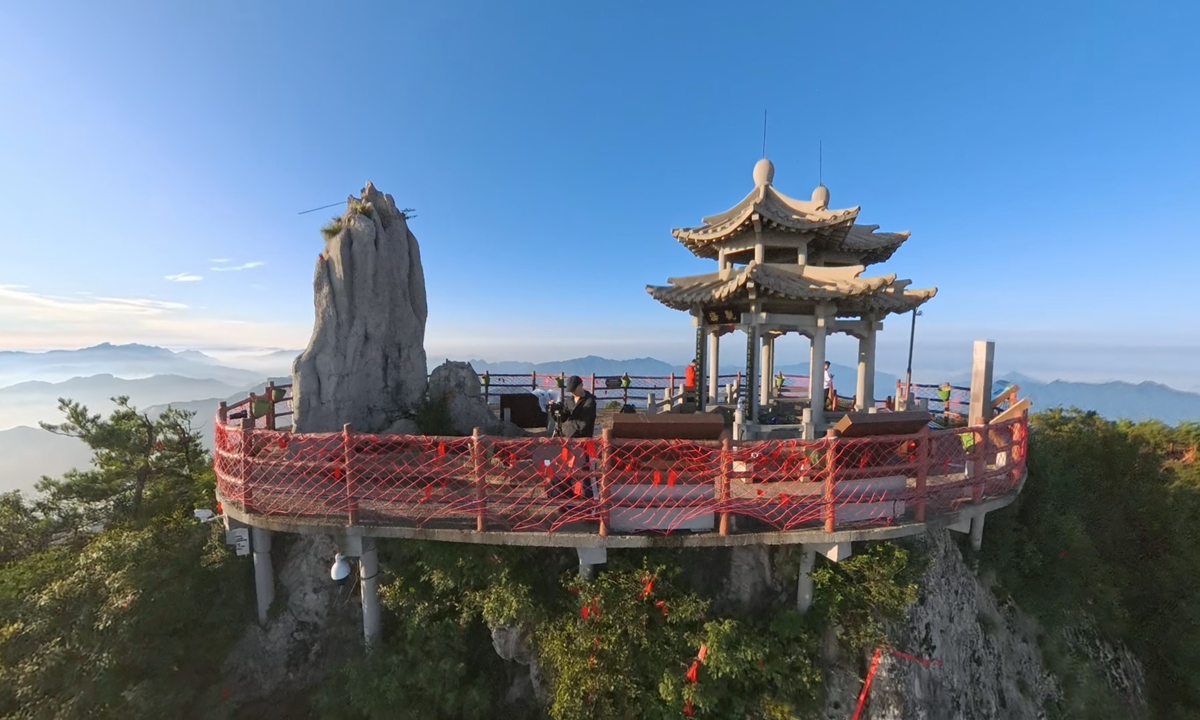
It all began with Laojun Mountain's spectacular summer cloud season. In a recruitment notice issued in July, operator of the scenic spot said July and August offer some of the best chances to see seas of clouds there, and it wanted someone to stay on the mountain and record how the spectacle changed from day to day. The unusual job posting unexpectedly drew over 3,500 entries in about a week, with Li eventually emerging as the mountain's first "cloud sea observer."
Located in Luanchuan county of Luoyang, Central China's Henan Province, Laojun Mountain rises to 2,217 meters and is known for its dramatic peaks, seas of clouds and long history of Taoist culture, according to the mountain's official website.
But how does it feel like to work on top of the mountain, far away from online shopping, food delivery and party with friends?
An unconventional way of seeing
"My days on the mountain quickly settled into a rhythm shaped partly by the clouds, and partly by the cafeteria," Li told the Global Times. He usually got up around 5 am to shoot the sunrise and clouds, had an early lunch as the cafeteria opens at 11 am, spent the afternoon exploring around the mountain, then rushed to cafeteria for dinner before heading back to the observation spots for sunset. The day often ended with editing footage until close to midnight.
"Sometimes there is nothing in front of you from one viewpoint, but after walking a little farther and changing the angle, a small sea of clouds jumps in front of my eyes."
Professional photographers usually seek higher vantage points for better views of seas of clouds, while Li sometimes headed down toward the mountainside. "That was something I really hadn't expected," Zhang Pengyuan, a manager at Laojun Mountain, told the Global Times.
"This was exactly why the scenic spot wanted eyes from outside to find the beauty of the mountain through a different angle," Zhang said.
What set Li apart, Zhang joked, was precisely that he was "not professional." Unable to calculate cloud heights or predict the perfect shooting conditions from weather forecast, Li relied on the simplest method: going out again and again to see what had changed. That sometimes led to compositions the scenic spot's own photographers had never considered. "What he recorded was closer to what an ordinary visitor could actually see," Zhang said.
Li had arrived on the mountain with little professional photography experience. Media reports said that before taking the job, he was not yet proficient with a drone, and his previous videos usually drew only a few hundred or a few thousand views. However, that changed almost overnight when his application video took off, eventually drawing tens of thousands of likes and helping him stand out from more than 3,500 applicants.
From visitors to storytellers
Beyond Laojun Mountain, scenic spots across China have increasingly been inviting young people to take part in content creation, event planning and tourism promotion, often through unconventional jobs tailored to the language and habits of social media.
According to Southern Metropolis Daily, Shennong Valley National Forest Park in Central China's Hunan Province recently recruited 10 "wild men" to dress in animal costumes and interact with visitors in the forest.
The Dixin Valley Scenic Area in Hubei Province also drew more than 3,000 applicants for 12 summer trainee positions to play as NPCs, produce creative content, and work as photographer and tour guide for 10 days.
The idea goes beyond novelty. Scenic spots are increasingly turning to young creators who understand short videos, online trends and the interests of their peers. A tourism short-video contest in Jinhua, East China's Zhejiang Province held in 2025 featured university students presenting the city through vlogs, traditional-style costume transformations and AI-generated art - part of a broader effort to let young people help shape how destinations are seen and experienced.
Young travelers are increasingly drawn to experiences that are immersive, participatory and easy to share, reflecting a broader shift in China's tourism market from "standardized sightseeing" toward more personalized experiences, Zhang Lingyun, a professor and the executive editor-in-chief of the Tourism Tribune, told the Global Times.
As tourism offerings have expanded and competition has grown, travelers have more choices. Changing consumer preferences in China mean many young people now look beyond simply "seeing the beauty" to experiences that feel distinctive, personal and worth sharing on social media.
The internet and social media have accelerated this shift, Zhang said, adding that as "digital natives," Chinese young people are becoming increasingly fluent in short videos, social platforms and online interaction. By bringing young people directly into content production, scenic spots can move beyond simply guessing what tourists want through surveys, and learn from what they actually create and share.
Initiatives such as the "cloud sea observer" can help destinations rediscover themselves through a visitor's eyes while reaching younger audiences more effectively. The goal, Zhang noted, remains the same: better meeting tourists' needs, even as the tools, channels and participants have changed, he said.
On his final morning on Laojun Mountain, Li got up early once again to watch the sunrise. But this time, he lowered the camera.
"That was when I suddenly realized how beautiful the mountain really was," Li said. After 30 days of chasing clouds, searching for angles and turning each day into footage to share with other young Chinese in the online community, he was finally able to simply look.
When Li was really enjoying the last moments on the mountain, he - just like the line from comedy The Secret Life of Walter Mitty - "didn't like to have the distraction of the camera. Just wanted to stay in it."
。
China has firmly rejected such hypes. "Xisha Qundao is China's inherent territory, over which there is no dispute. Necessary construction on our own territory is aimed at improving living and working conditions on the islands and growing the local economy," said Chinese Foreign Ministry spokesperson Lin Jian at a regular press conference on March 23.
Despite that clear explanation, some foreign media outlets continued to point their finger at the Chinese reef. Why is China carrying out construction at Lingyang Jiao, and why do external parties have no grounds to reproach? Chinese experts recently spoke with the Global Times about the history, purpose and legal basis of the construction on the reef.
Indisputable sovereignty
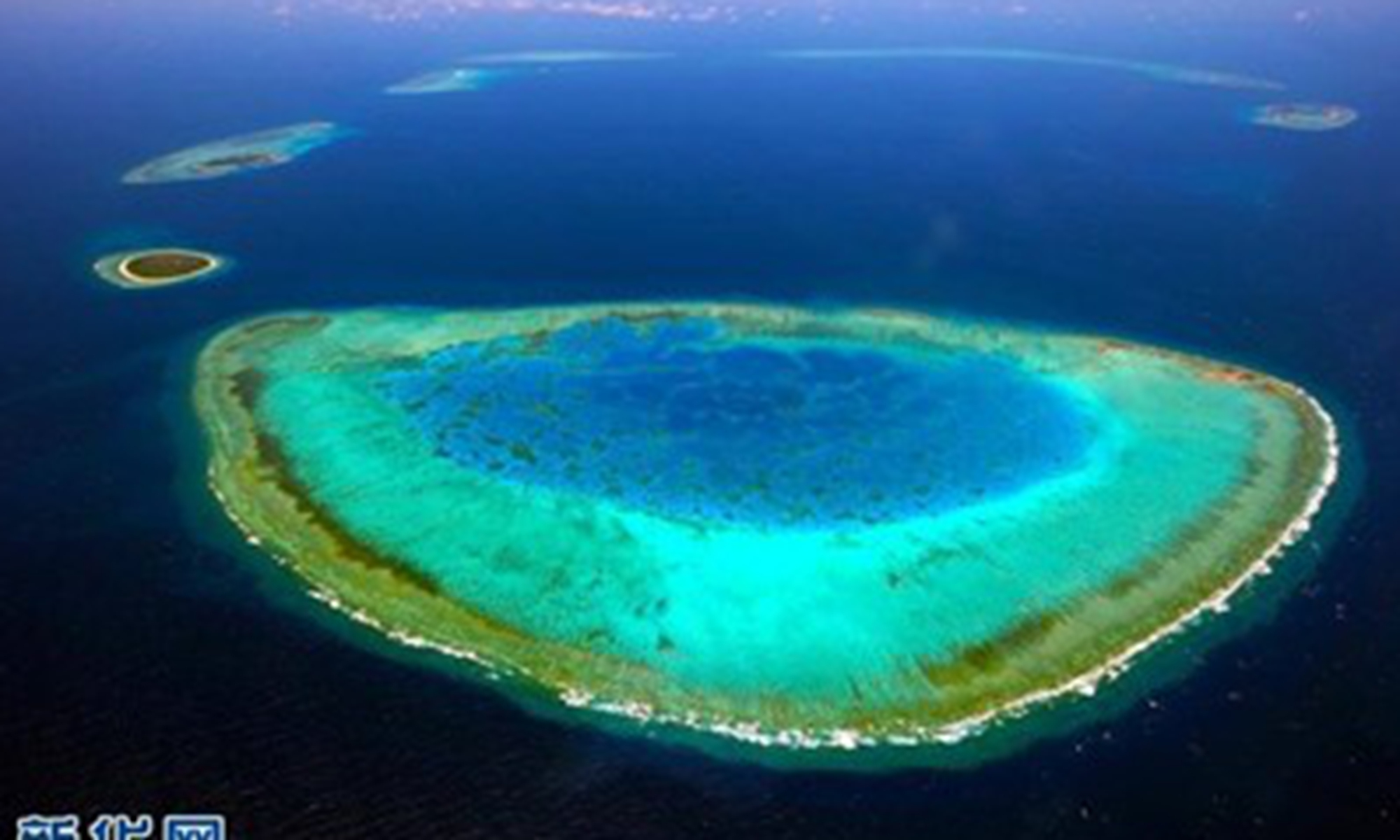
Lingyang Jiao, whose name comes from its resemblance to an antelope horn, lies on the western side of Yongle Atoll in the Xisha Qundao, about 89 kilometers from Yongxing Island and 6.5 kilometers from Jinyin Island. The reef stretches six kilometers from north to south, measures about 3.5 kilometers at its widest point and covers roughly 15 square kilometers.
The reef, also traditionally known among Chinese fishermen as Kuangzai or Quanzai, is administered by the city of Sansha in South China's Hainan Province.
"Lingyang Jiao is an inherent part of China's territory. Fishermen from Hainan sailed there to fish as early as the Ming (1368-1644) and Qing (1644-1911) dynasties," Xu Xiaodong, a vice chairman of the Huayang Center for Maritime Cooperation and Ocean Governance, told the Global Times on March 23.
In 1935, the then-Chinese government included the reef in its bilingual list of South China Sea island names. Its name was reviewed again in a corresponding list issued by the then ministry of the interior in 1947 and has remained in use ever since, Xu said.
During the 1974 Xisha self-defense counterattack, the South Vietnamese warship Nhat Tao was sunk in waters near Lingyang Jiao. Xu said these facts demonstrate the Chinese government's determination and actions to safeguard its sovereignty over the Xisha Qundao, including Lingyang Jiao.
Lei Xiaolu, a professor at Wuhan University China Institute of Boundary and Ocean Studies, said that China was the first country to discover, develop and administer the Xisha Qundao. Successive Chinese governments have continuously exercised jurisdiction over the islands, including Lingyang Jiao, forming a clear historical record.
France recognized China's sovereignty over the Xisha Qundao in the late 19th and early 20th centuries, Lei said. When France attempted to occupy the Xisha Qundao in 1931 and nine islands and reefs in the Nansha Qundao in 1933, the Chinese government immediately protested and reaffirmed its sovereignty.
Numerous official documents from that period clearly placed the Dongsha, Xisha, Zhongsha and Nansha Qundao within Chinese territory, such as a 1935 map of the South China Sea islands, a brief chorography of the South China Sea islands in 1947, a comparison table of their old and new names, and a location map bearing the South China Sea dash line. After the founding of the People's Republic of China in 1949, the Chinese government continued to exercise sovereignty over the Xisha Qundao.
"Lingyang Jiao is part of China's Xisha Qundao. The Chinese government has repeatedly made clear that China has indisputable sovereignty over the Xisha Qundao," Lei said.
Construction to improve living
Previously published aerial images have shown Lingyang Jiao's distinctive ring-shaped lagoon, but its natural beauty long contrasted with the rudimentary living conditions faced by local fishermen.
According to the official website of the Sansha city government, the reef was once almost entirely barren, with little vegetation. Fishermen lived two or three to a coral-stone hut measuring only three or four square meters.
For a long period, a single diesel generator was used to supply electricity on the reef, providing power only between 7 pm and 11 pm. Fresh water had to be carried from vessels arriving from Hainan Island, while typhoons posed a constant threat to residents and their homes.
Construction of a fishermen's settlement was put on the agenda in 2012. However, the complex topography and hydrological conditions around the reef prevented large vessels from approaching, forcing workers to carry construction materials ashore by hand.
After years of development, Lingyang Jiao now has basic infrastructure including a desalination facility and a power station. Its navigation channel has been dredged and opened, and a fishermen's settlement has been completed.
Xu said the current construction serves at least two purposes: The first is to provide more and better public services.
Lingyang Jiao lies on the outer edge of the Yongle Islands, surrounded by some of the most difficult navigational waters in the Xisha Qundao. In 2015, the Chinese government built and activated a lighthouse there to provide navigation services for passing vessels.
"Further construction can provide stronger infrastructure support for maritime search and rescue, disaster prevention and mitigation, and help ensure navigational safety in the South China Sea," Xu said.
The construction will also further improve local residents' living conditions. Transport difficulties have long left the reef short of essential supplies, while typhoons have repeatedly caused serious damage to housing. The construction can better meet fishermen's needs for water, electricity, secure housing and employment, Xu noted.
"Fishermen working in the South China Sea have long faced extremely harsh conditions. Far from shore, they spent weeks exposed to intense sunlight, strong winds, heavy rain and sudden typhoons, often without a safe place to rest or repair their boats," Ding Duo, director of the Research Center for International and Regional Issues at the National Institute for South China Sea Studies, told the Global Times on Wednesday.
Ding said the construction is intended to improve the living standards of Chinese fishermen and represents a direct result of China's people-centered development philosophy.
"China now has the capacity and resources to develop infrastructure at Lingyang Jiao. Doing so is both feasible and responsible, and responds to the long-standing needs of fishermen who have depended on these waters for their livelihoods for centuries," Ding said.
Besides, ecological protection has remained a prerequisite for production and construction on the reef. In 2019, a research team led by Professor Xie Qiang from Sun Yat-sen University School of Life Sciences discovered a new marine insect species at Lingyang Jiao and named it after the reef.
It was China's first discovery of a strictly marine insect group at the family level within its territory and territorial waters, filling a gap in the country's scientific records.
"China's land reclamation and construction activities are conducted in strict accordance with laws, regulations and ecological standards," Xu said. "Through technological innovation and systematic governance, China has balanced ecological protection with resource utilization. The results of environmental protection at Lingyang Jiao and in its surrounding waters are clearly visible," Xu said.
No room for external interference
China's construction at Lingyang Jiao has drawn persistent attention from some foreign media. Since January, outlets including Newsweek have used satellite images to hype the project.
The US-based Center for Strategic and International Studies recently claimed that the reclaimed area at Lingyang Jiao had surpassed that of Yongxing Island and was approaching the size of Meiji Jiao, China's largest island reef in the South China Sea.
A Reuters report published on Wednesday went further, claiming that Lingyang Jiao could be one of the Chinese military's most important features in the South China Sea. It speculated that the reef could host surveillance facilities or support nuclear-powered submarines to strengthen "China's military presence around key waterways."
Ding rejected this accusation, saying that as a permanent member of the UN Security Council, China conducts construction on islands and reefs in the South China Sea strictly within the framework of international law.
"The construction at Lingyang Jiao is peaceful in nature and serves the public. It is intended to better safeguard national territory while providing practical assistance to people and vessels operating in the South China Sea," Ding said.
Ding said improved infrastructure at Lingyang Jiao would bring broader benefits to the region by strengthening China's capacity to provide public services. These include more accurate weather forecasting, faster and more efficient emergency rescue, broader marine scientific research and stronger safety support for the South China Sea's busy international shipping routes.
"China's construction can provide more international public goods and help reduce risks for merchant ships, fishing vessels and other maritime activities," Ding said. "It is not militarization, but an effort aimed at safeguarding peace and stability. The tendency to view everything China does as military in purpose reflects the dark geopolitical mentality of the West."
Xu said China's land reclamation and construction activities also have a solid basis in international law. China ratified the UN Convention on the Law of the Sea in 1996 and, under the convention, has the right to conduct construction on islands and reefs within its own territorial waters without seeking the consent or approval of any other country.
"The Xisha Qundao have been Chinese territory since ancient times. Lingyang Jiao has long been a place where Chinese fishermen live and work, and it also carries the history of the Maritime Silk Road," Xu said.
Both history and present-day reality demonstrate China's indisputable sovereignty over the South China Sea islands, including the Xisha Qundao, Xu noted. The waters surrounding the Xisha Qundao are under China's effective administration, making land reclamation and construction at Lingyang Jiao normal activities within China's sovereign jurisdiction.
Objections from external parties are inconsistent with China's long-standing administration of the South China Sea islands and have no basis in international law or international rules, Xu said. No country has the right to interfere in China's construction activities at Lingyang Jiao.
。

二 |
Current article:http://www.laojiusidaosenleliao.bond/list_s2nxfnu/r4w.htm
Published on:04:56:52