龙珠超
消息称 Bose QuietComfort 第二代头戴式降噪耳机 8 月发布_我的网站

A |
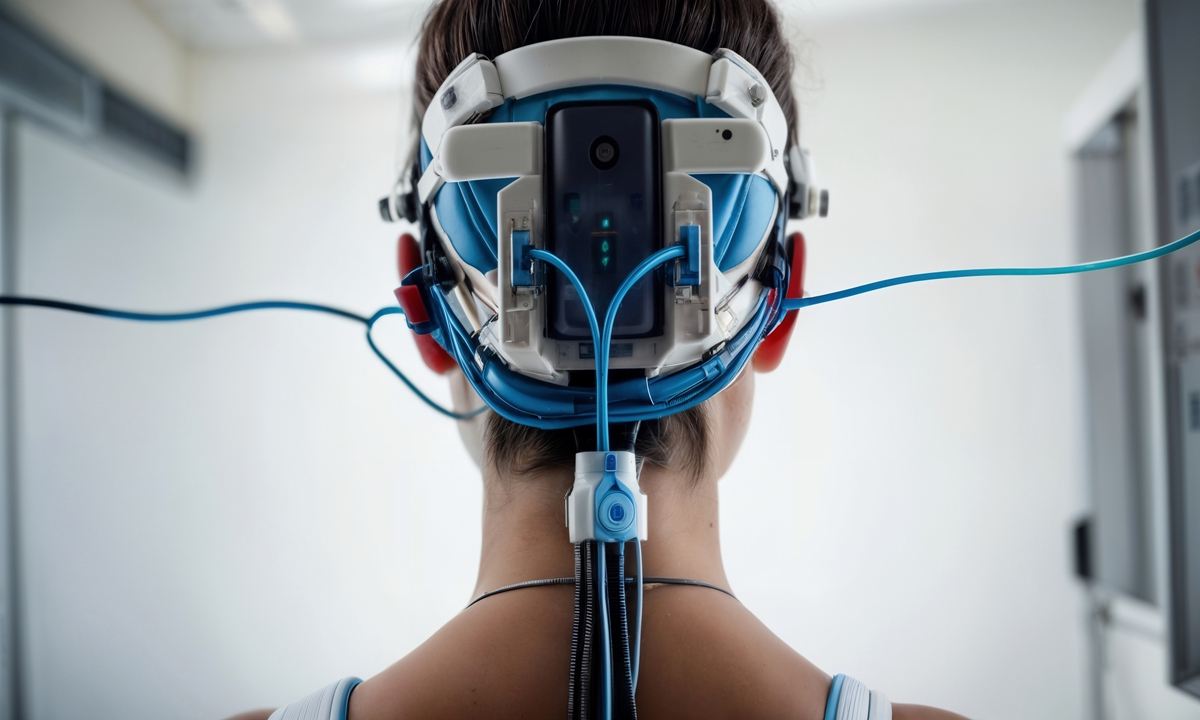
Photo: VCG
Chinese researchers have developed a multifunctional electrode coating that addresses key challenges in long-term brain-computer interface (BCI) implantation, including signal loss and tissue adhesion, bringing BCI one step closer to clinical application, the Global Times learned from the research team behind the findings on Sunday.
As an emerging field combining neuroscience and artificial intelligence (AI), BCI faces a major challenge of ensuring long-term compatibility between electrodes and brain tissue. Previous clinical trials showed that immune responses could cause implanted electrodes to retract after just three months, severely reducing signal quality and the number of available channels.
This problem stems from chronic inflammation triggered by implants, which creates insulating scar tissue around electrodes and separates them from neurons. Irreversible adhesion between electrodes and brain tissue after long-term implantation also makes device removal risky, potentially causing brain injury during follow-up surgeries.
Experiments showed that flexible neural electrodes coated with this material could operate stably in the brain for more than 300 days and could be safely removed without causing damage. This means the universal coating technology can make electrodes not only operate stably over the long term but can also be safely removed and replaced after aging, paving the way for long-term BCI applications.
Developed by the research team led by Zhang Wei at the Technical Institute of Physics and Chemistry, Chinese Academy of Sciences, associated with Beijing Tiantan Hospital, Shanghai Institute of Microsystem and Information Technology and NeuroXess, a high-tech life science company specializing in BCI technologies, the cationic alternating peptide electrode coating preserves electrode flexibility and conductivity, while offering antibacterial, anti-protein adsorption and immune-rejection-inhibiting functions.
A 300-day animal study showed the coating's effectiveness. Bare electrodes experienced a sharp loss of recording capability after 90 days of implantation and could barely detect neuronal signals after 300 days. In contrast, coated electrodes maintained stable recording channels and consistently captured neural signals above 155 microvolts.
In terms of neural modulation, after 300 days of implantation, conventional electrodes required a current of 100 microamps to induce weak limb responses, while coated electrodes triggered clear movements with only 2 microamps, improving modulation efficiency by 50 times.
Notably, the removal tests highlighted a key advantage of the coating that electrodes no longer form irreversible bonds with brain tissue. In the experiments, the coated electrodes were removed intact, with minimal damage to the surrounding brain tissue, Zhang told the Global Times on Sunday.
。 IT之家 7 月 20 日消息,据法国媒体 Dealabs Magazine 爆料,全新 Bose QuietComfort(第二代)头戴式耳机即将发布。这款新品此前没有任何相关的爆料或传闻泄露,消息称这款耳机将于 8 月 13 日开售,预计官方将于 8 月 7 日正式官宣并开启预购。
据IT之家此前报道,Bose 在 2023 年发布了 QuietComfort 耳机和 QuietComfort Ultra 耳机,国行售价分别为 2499 元和 3599 元;2025 年,Bose 仅推出了 QuietComfort Ultra II 耳机,国行售价 3599 元。

B |
▲ QuietComfort Ultra II 耳机
据悉,Bose QuietComfort 第二代头戴式耳机在首发时将提供至少六种配色。根据该媒体获得的官方介绍,新款耳机的主要改进与新特性如下:
全新设计:采用药丸状耳罩与更宽的可调节头梁,并增加了合成皮革材质的用量,以提升日常佩戴舒适度;
Bose TrueSpatial:该空间音频技术能够提供更具沉浸感且更自然的聆听体验;
无损音频:新款耳机支持通过 USB-C 接口传输高保真音频,在第一代产品上该接口仅能用于充电;
降噪优化:ActiveSense 技术现在能够在通透模式下,自动削弱刺耳的突发环境噪音;
全新聆听模式:新增沉浸模式、专为视频内容设计的影院模式以及“降噪关闭”选项。这些新功能取代了第一代的个性化模式系统(此前该系统仅提供一项防风噪选项);
通话质量提升:更有效地抑制环境背景噪音,确保语音通话更加清晰;
按键控制重构:按键布局更加直观,直接集成于耳罩之上。
新款耳机的电池续航表现与现款型号保持一致:在开启主动降噪的情况下,最长可提供 24 小时的续航时间;若同时开启 TrueSpatial 沉浸式音频,续航时间缩短为 18 小时。
价格方面,这款耳机在海外的售价为 349.95 欧元(现汇率约合 2711 元人民币)或 359 美元(现汇率约合 2434 元人民币)。
Current article:http://www.laojiusidaosenleliao.bond/news/20260826_826890.xls
Published on:09:22:56

 谁还记得他?四年前击杀阿根廷的沙特英雄,本届世界杯却引发争议
 中华人民共和国和约旦哈希姆王国关于深化中约战略伙伴关系的联合声明
 英格兰女足加时绝杀德国女足 队史首夺欧洲杯冠军
 万泰生物:实控人钟睒睒捐赠3300万股公司股份
 Fishing vessels set sail in Fujian as fishing season resumes(1/2)
 新加坡海军将和中国人民解放军进行联合演习
查看所有0条评论>>