
海派甜心
PLA Southern Theater Command tracks, monitors and warns 3 Philippine aircraft after their illegal entry into Huangyan Dao airspace_我的网站

一 |
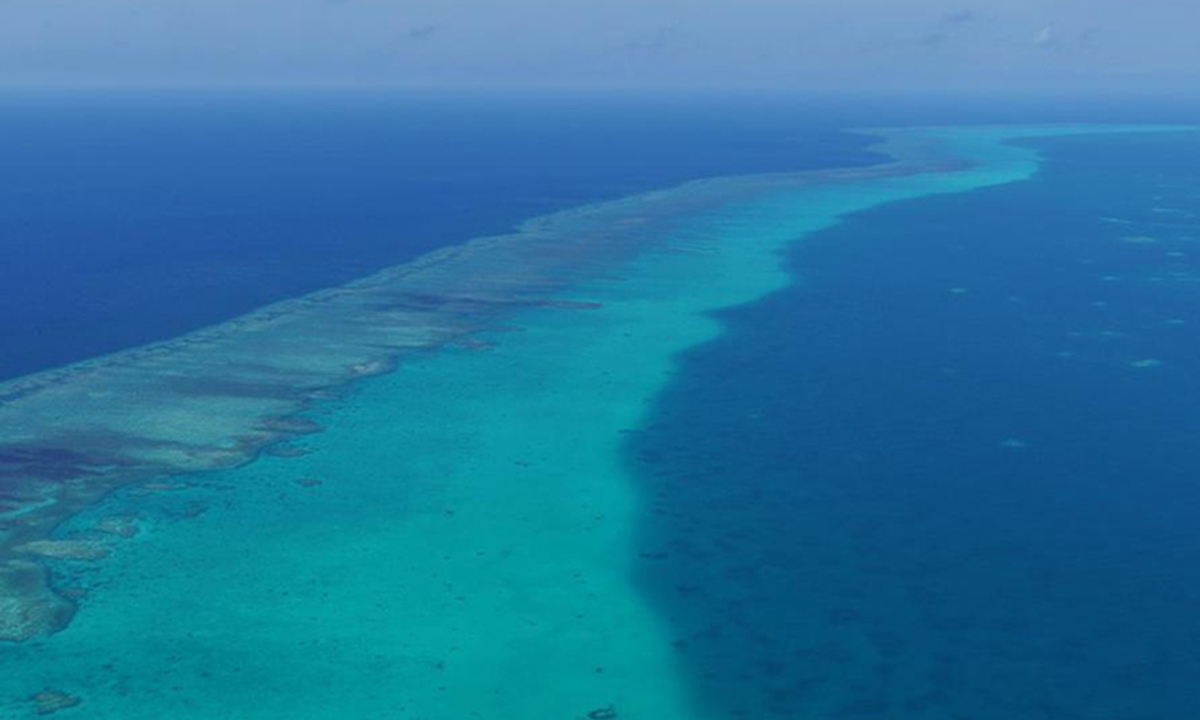
On Friday, three small Philippine aircraft - an Islander, a C-208, and a PA-31T - illegally intruded into China's territorial airspace over Huangyan Dao without approval from the Chinese government. The naval and air forces dispatched by the PLA Southern Theater Command (STC) tracked and monitored the Philippine aircraft, and issued verbal warnings to them in accordance with laws and regulations, senior Colonel Li Jianjian, spokesperson for the PLA STC Air Force, said in a statement on Friday.
The acts of the Philippine side seriously violate China's sovereignty, and are highly likely to cause misunderstanding and miscalculation. "We sternly warn the Philippine side to stop rights-violation and provocative acts immediately. Forces of the STC remain on high alert at all times to firmly safeguard national sovereignty and security as well as regional peace and stability," said the spokesperson.
Ding Duo, director of the Research Center for International and Regional Issues at the National Institute for South China Sea Studies, called the Philippines' latest move another "stunt."
The Philippines previously submitted its so-called "territorial sea baselines" around Huangyan Dao, so it is not unexpected that Manila would follow up with actions at sea or in the air to stir up tensions, keep the issue in the spotlight and stage further provocations, said Ding.
At present, the Philippines can barely gain access to the relevant waters and has secured no tangible advantage there. Aircraft, however, can enter and leave the area quickly. Such operations not only provide material for media hype but also generate footage of China's response, allowing Manila to project resolve and reassure its military and law-enforcement forces at home, Ding told the Global Times.
In late July, the Philippines notified the United Nations of the so-called "baselines and maritime zones" surrounding Huangyan Dao. On July 31, the Chinese Foreign Ministry issued a statement on the Philippines' delimitation of the so-called "baselines of the territorial sea" around Huangyan Dao, calling the move "a grave infringement upon China's territorial sovereignty and a serious violation of international law."
"It is illegal, null and void. China firmly rejects and will never accept it," the statement said.
Meanwhile, Manila appears emboldened by growing security and defense cooperation with the US and Japan. Backed by these external partners, the Philippines has shown greater willingness to stage provocations, while its military and law-enforcement forces have displayed increasingly risk-prone and opportunistic behavior, said Ding.
China has exercised considerable restraint over the Huangyan Dao, but the Philippines should not mistake that restraint for weakness. If China were to employ the full range of available measures, Philippine aircraft would likewise be denied access to the area, said Ding.
By dispatching small aircraft for deliberate provocations, the Philippines is further increasing the risk of miscalculation. Such aerial incursions are highly unpredictable and carry serious escalation risks. If China responds with resolute or more forceful measures to defend its rights and an unintended incident occurs as a result, the Philippines should bear full responsibility for the consequences, the expert warned.
。 부정수급 땐 사용금지 등 조치 재정지원 공정성 높이기 강화앞으로 교통비 환급 서비스인 ‘모두의카드’ 이용 시 부정수급을 3차례 하면 1년간 이용할 수 없게 된다. 조직적이고 반복적으로 부정수급하다 걸리면 최대 3년까지 사용이 금지된다. 국토교통부 대도시권광역교통위원회는 26일 모두의카드 부정수급을 예방하고 재정지원의 공정성을 높이기 위해 이 같은 내용으로 서비스 이용 약관을 개정한다고 밝혔다.
| 서울시내 한 지하철역에서 시민들이 개찰구를 나서고 있다. 뉴시스 |
Current article:http://www.laojiusidaosenleliao.bond/dfnr/ygg.html
Published on:09:09:04


