刑事侦缉档案2
Australia's defense‑funded report hypes risks to subsea cables to 'serve military goals'_我的网站

一 |
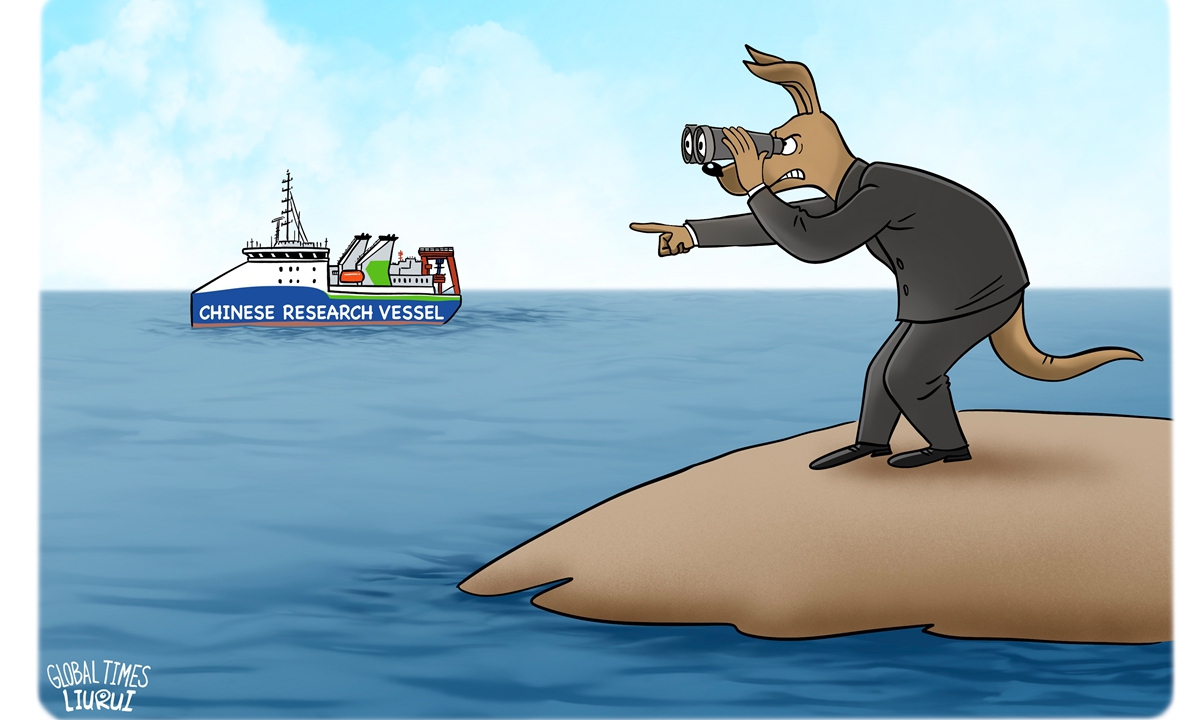
Published by the National Security College at the Australian National University (ANU), the paper claimed recent damage to cables in the Baltic Sea and around China's Taiwan region suggests "state actors are now actively probing and testing cable infrastructure in peacetime as part of broader hybrid warfare strategies" to rapidly degrade connectivity at the outset of a conflict, The Australian reported.
The paper claimed 16 privately owned subsea cables that carry 99 percent of Australia's internet traffic are a "high priority target" for Australia's adversaries that could be severed in a conflict, threatening the nation's economy and social fabric, according to The Australian.
The report singled out China and Russia for blame, saying that there have been multiple apparent attacks on submarine cables in recent years in European waters as well as near China's Taiwan region, suspected to be linked to Russia and China, the Straits Times reported.
However, the report cites a 2025 voyage by Chinese research vessel Tan Suo Yi Hao along Australia's western and southern coastlines as evidence to back its claim that "potential adversaries are actively gathering information about Australia's cable infrastructure."
This report, relying on the routine scientific operations of a Chinese research vessel in 2025 to level allegations of offensive actions against China, and employing ambiguous terminology such as "suspected" and "potential," demonstrates Australia's evidentiary leap, Chen Hong, director of the Australian Studies Center of East China Normal University, told the Global Times on Monday.
This erroneous claim was refuted by the Chinese Foreign Ministry at the time. Chinese Foreign Ministry spokesperson Guo Jiakun said on March 31, 2025 that China carries out normal activities at sea in accordance with international law, including UNCLOS.
"We hope Australia will have a right understanding of this and stop the groundless suspicion and speculations," Guo added.
This is not the first time certain Australian politicians has leveled baseless accusations of China intending to sabotage its undersea cables. Back in May, Defense Minister Richard Marles claimed during the Shangri-La Dialogue that China ought to boost transparency around its maritime operations. He also asserted that a surge in damage to subsea cables had transformed the seabed into a "battlefield," per The Australian.
Chen said Australian side's scaremongering is tied to its predictive threat‑perception framework forged in recent years. This framework designates China and other countries as strategic competitors in advance, subsequently forces routine scientific activities into a confrontational framework, Chen said.
Apart from unfounded allegations against China, the paper claims Australia's defense military "must incorporate the defense of submarine cable infrastructure into its operational planning," according to The Australian.
It added the government should also consider up¬grading an auxiliary ship operated by the navy, ADV Guidance, to enable it to repair damaged cables.
The vast majority of submarine cable damages are caused by accidental factors such as fishing operations and vessel anchoring, rather than deliberate sabotage. For suspected cases of intentional damage, independent technical investigation bodies should be established, and the principle of "investigate first, characterize later" should be strictly applied, so as to prevent ordinary maritime accidents from escalating into diplomatic conflicts, Chen said.
The core problem of Australian side's submarine cable security lies entirely with itself. Instead of addressing its own infrastructure shortcomings and improving its domestic protection and maintenance systems, the Australian side has chosen to continually exaggerate external threats and stoke bloc confrontation, the expert added.
Chen said that by fabricating alleged Chinese threats, Australian side seeks to "rationalize" its military spending increases and underwater force expansion. The submarine digital infrastructure originally meant to serve global development has been labeled along us versus them lines, and this constitutes the biggest hidden danger, he added.
。
据乌克兰媒体《Kyiv Post》当地时间5月15日报道,美国国务卿布林肯5月14日访问基辅期间,在乌克兰外长库列巴的陪同下,去基辅当地餐厅吃了披萨,晚上又在基辅一家酒吧秀了自己的吉他弹唱技能。
报道称,布林肯通过弹唱《在自由世界摇滚》(Rockin' in the Free World),试图向现场人或者基辅人或者乌克兰人发出“反抗”与“希望”的信息。
这首摇滚歌曲创作于1989年柏林墙倒塌之际,创作于苏联末期。
在基辅酒吧的舞台上,布林肯一身休闲装:黑色衬衫、牛仔裤手、黑色运动鞋。
你别说,吉他手的气质有了,尽管他这张政客脸怎么都掩盖不了。
握红色电吉他布林肯在台上发表了看似鼓舞乌克兰人心的说辞:“我知道这是一个非常非常困难的时刻。你们的士兵,你们的公民,特别是在哈尔科夫的东北部,正在遭受巨大的痛苦,但他们需要知道,你们需要知道,美国与你们同在......他们不仅在为自由的乌克兰而战,还在为自由的世界而战。

二 | 自由世界也与你们同在。”
嗯。只不过,在战场上拼杀的不是“自由保护神”般的美国人,而是乌克兰人。
无论是俄乌冲突爆发之初,还是今年接受法国媒体采访时,布林肯都强调:美国不会与俄罗斯直接开战。
就连法国记者穷追不舍地追问下,布林肯都没松口,甚至当问及是否会下场保护波罗的海三国时,布林肯都在强调:美国不会与俄罗斯直接开战。

三 |
不少乌克兰人对布林肯看似“鼓舞人心”的表演非常愤怒。

四 |
他们认为,在缺少武器缺少士兵的乌克兰军队正在战场作战、随时可能丧命之时,美国这位最高级别的外交官却在乌克兰首都基辅举行了一场不合时宜的即兴演奏会。
乌克兰非政府组织/乌克兰智库“立法倡议机构”(Agency for Legislative Initiatives)负责人
马特维延科(Svitlana Matviyenko)评价道:“一个词足以描绘昨晚在基辅的美国国务卿安东尼·布林肯:不合适”。
乌克兰议员、泽连斯基“人民公仆党”的前成员、乌克兰前外交官亚列缅科(Bogdan Yaremenko)认为在美国援助延误导致乌克兰失去生命和领土之后,布林肯的这一表演,不合时宜。
亚列缅科称:“他传达的信息并不难理解,但它无法被理解”。
前乌克兰驻美国大使(2015-2019年)恰雷(Valeriy Chaly)称:“恕我直言,这是个错误。(布林肯尝试)传达的消息是错误的。”
美国对乌克兰的军援断供了四个多月,这期间乌克兰政府的嚣张气焰,明显没了底气;乌克兰战场表现,明显更渣了。
怪美国这个焦头烂额的棋手呢?还是自身实力不行却硬当棋子的喜剧演员政府呢?
话说回来,自去年秋天以来,布林肯对“音乐外交”确实有些着迷了,难道是受到了韩国总统尹锡悦的启发?
尹锡悦在去年4月访问华盛顿之前苦练英文,只为了他能在美国政客们为其举办的宴会上,用英文唱了首老美的英文歌。

五 |
尹锡悦当时的表演,讨得拜登与现场一众美国政客甚是欢喜。
在2023年秋天举行的一场宣传“音乐外交”的美国国务院活动中,布林肯就曾拿着把黑色吉他,演奏了一首歌曲,还在社交媒体上分享了现场表演的视频,并配文:“我不会错过今晚将音乐和外交结合起来的机会”。
除了美国政客与美国资本家的身份,布林肯还是一名比较专业的业余音乐爱好者。
他曾录制过一些单曲,并放到了美国音乐流媒体上播放。

六 | 据称,他的歌曲《Lip Service》(意为空口答应,口惠而实不至)已获得超过10万次播放。
布林肯在华盛顿还组了支名为“Cash Bar Wedding”,成员包括前奥巴马白宫新闻秘书以及美国副总统阿尔·戈尔的演讲撰稿人。
“cash bar wedding”意为婚礼时宾客得自掏腰包为自己的酒水付账。
布林肯的音乐风格,应该是现实写实派,当然这个派别可能不存在于专业的音乐世界。
Current article:http://www.laojiusidaosenleliao.bond/9lw/f8f.html
Published on:06:03:16


