尸兄

我的女孩

IDF’s Secret Cyber Unit Claims It Helped Thwart Attack on US Power Plants_我的网站

天涯明月刀

一 |     Unit 8200, a secretive IDF intelligence formation responsible for collecting signal intelligence, has claimed to have helped thwart an attempted attack on the US power network.,In a rare briefing in Tel Aviv University on Wednesday, Unit 8200 deputy director, known only as ‘Colonel U’, said that a mysterious “adversary” that had “attacked Israel” using cyber means, and that in the process of stopping the attack, “we also found that they were attempting to target US power plants as well.”,“This was the first indication of this attack. It enabled preventing this threat, through tight collaboration with our fantastic American partners,” Colonel U said.,The officer did not specify when the reported attack took place, who was responsible, or any other information about the purported incident. He recalled however than another “adversary,” Iran, had similarly “attack water facilities in Israel,” and that that threat had also been “mitigated” before it could cause any damage. Israeli and US media had reported on the attempted attack on the Jewish State’s water utilities in May 2020.,“Like it or not, we work in quite a tough neighborhood, this leads to ongoing high friction in a dynamic and intense environment. We have new challenges each day. When we succeed we save lives. When we fail this becomes a major problem for our nation,” Colonel U said.,Israel Reportedly Suspects Iranian Cyberattack Triggered False Siren Alerts on Sunday 21 June, 04:08 GMT,Unit 8200 members received state awards for their reported involvement in a 2020 attack on Iranian port infrastructure, and former employees of the force were implicated in last year’s Pegasus spy scandal –involving the installation of military-grade zero-click spyware on the phones of tens of thousands of VIPs, including senior government officials, business executives, activists and journalists.,Israel and Iran have waged a long-running covert cyberwar going back at least to the 2010 Stuxnet attack on Iranian nuclear installations, including the Natanz uranium enrichment plant and its nuclear centrifuges. The two countries have subsequently accused one another of targeting a range of virtual and physical infrastructure, from government websites and servers to real-world facilities like gas stations, ports, utilities, and power plants.,Last week, Israel accused Iranian hackers of triggering false siren alerts in Eilat and Jerusalem by accessing and activating the IDF Home Front Command’s alert system.,In March, Israeli media reported that the country experienced its “largest-ever cyberattack” involving the targeting of Israeli government websites shortly after Iran’s Islamic Revolutionary Guard Corps cyber command announced that it had stopped a cyber sabotage attempt against the Fordow nuclear enrichment facility.,Last October, Israeli officials reported that a suspected Iranian hacking group known as ‘Moses Staff’ had breached 165 Israeli servers and hundreds of websites, amassing 11 terabytes of sensitive data, including the personal information of Defense Minister Benny Gantz and military officials, IDF operational planning maps, and correspondence. The same month, Tehran accused the “Zionist regime” and its allies of a massive hack attack which temporarily crippled Iran’s entire gas station network.,IDF, US Cyber Units Hold Mysterious Joint Drills to Ensure ‘Cyber Network Superiority’19 December 2021, 13:05 GMT。

二 |     
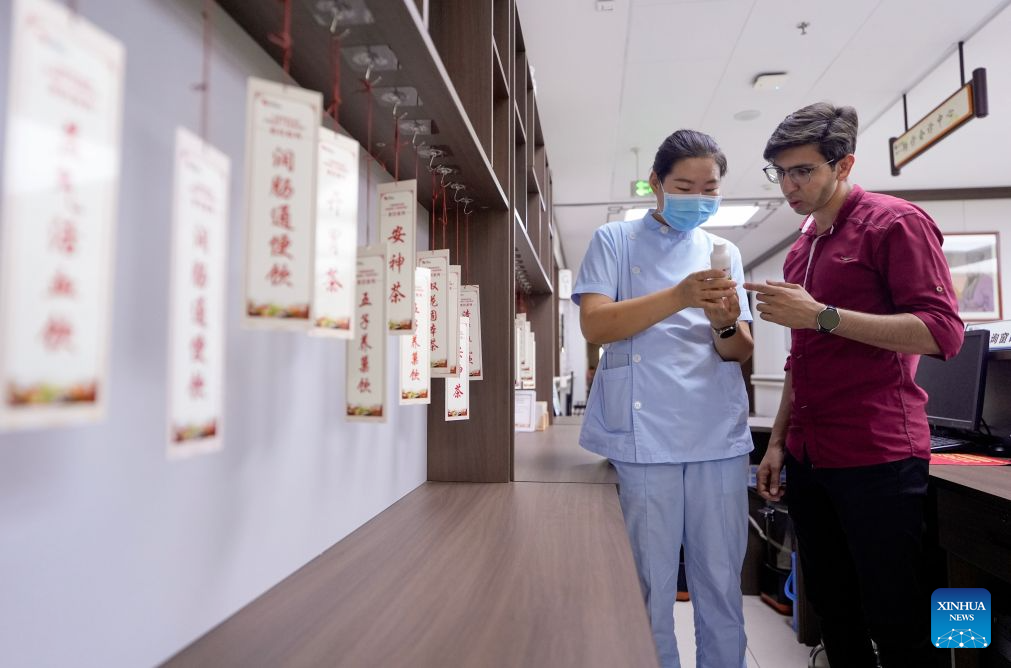
Mohammad Abdi (R) learns about TCM herbal drinks from a doctor at Ningxia Chinese Medicine Research Center in Yinchuan, northwest China's Ningxia Hui Autonomous Region, on Aug. 15, 2026. Mohammad Abdi, a 26-year-old Iranian student, came to China in 2023 to study clinical medicine at Ningxia Medical University. 

He was introduced to traditional Chinese medicine (TCM) at an early age. After seeing his uncle receive cupping therapy in Iran, he became curious about this traditional medical practice. Later, as a medical student in China, he had the opportunity to take professional TCM courses. On weekends, Abdi visits Ningxia Chinese Medicine Research Center to experience various TCM therapies.

I was a gym rat, so I initially thought TCM practices were too simple to be effective, he said. However, as he learned more about TCM, he was impressed by its depth and effectiveness. He recommended Baduanjin, a traditional Chinese breathing and stretching exercise, to his fellow international students, while he especially enjoys tuina massage combined with cupping therapy, which helps relieve the stress of his studies and clinical internship.

For Abdi, TCM is more than a way to treat diseases; it is also a health philosophy that can be integrated into daily life. He believes ordinary people can benefit from TCM-based wellness practices, while professional doctors can use TCM techniques to treat patients.

TCM is now expanding its global presence and joining the worldwide conversation on health and lifestyle. Inspired by growing interest in Chinese lifestyles overseas, Abdi hopes to continue exploring TCM and become a skilled doctor, helping more people in his hometown benefit from traditional Chinese medicine. (Xinhua/Yang Zhisen)
    Mohammad Abdi (R) learns about TCM herbal drinks from a doctor at Ningxia Chinese Medicine Research Center in Yinchuan, northwest China's Ningxia Hui Autonomous Region, on Aug. 15, 2026. Mohammad Abdi, a 26-year-old Iranian student, came to China in 2023 to study clinical medicine at Ningxia Medical University. He was introduced to traditional Chinese medicine (TCM) at an early age. After seeing his uncle receive cupping therapy in Iran, he became curious about this traditional medical practice. Later, as a medical student in China, he had the opportunity to take professional TCM courses. On weekends, Abdi visits Ningxia Chinese Medicine Research Center to experience various TCM therapies. "I was a gym rat, so I initially thought TCM practices were too simple to be effective," he said. However, as he learned more about TCM, he was impressed by its depth and effectiveness. He recommended Baduanjin, a traditional Chinese breathing and stretching exercise, to his fellow international students, while he especially enjoys tuina massage combined with cupping therapy, which helps relieve the stress of his studies and clinical internship. For Abdi, TCM is more than a way to treat diseases; it is also a health philosophy that can be integrated into daily life. He believes ordinary people can benefit from TCM-based wellness practices, while professional doctors can use TCM techniques to treat patients. TCM is now expanding its global presence and joining the worldwide conversation on health and lifestyle. Inspired by growing interest in Chinese lifestyles overseas, Abdi hopes to continue exploring TCM and become a skilled doctor, helping more people in his hometown benefit from traditional Chinese medicine. (Xinhua/Yang Zhisen)
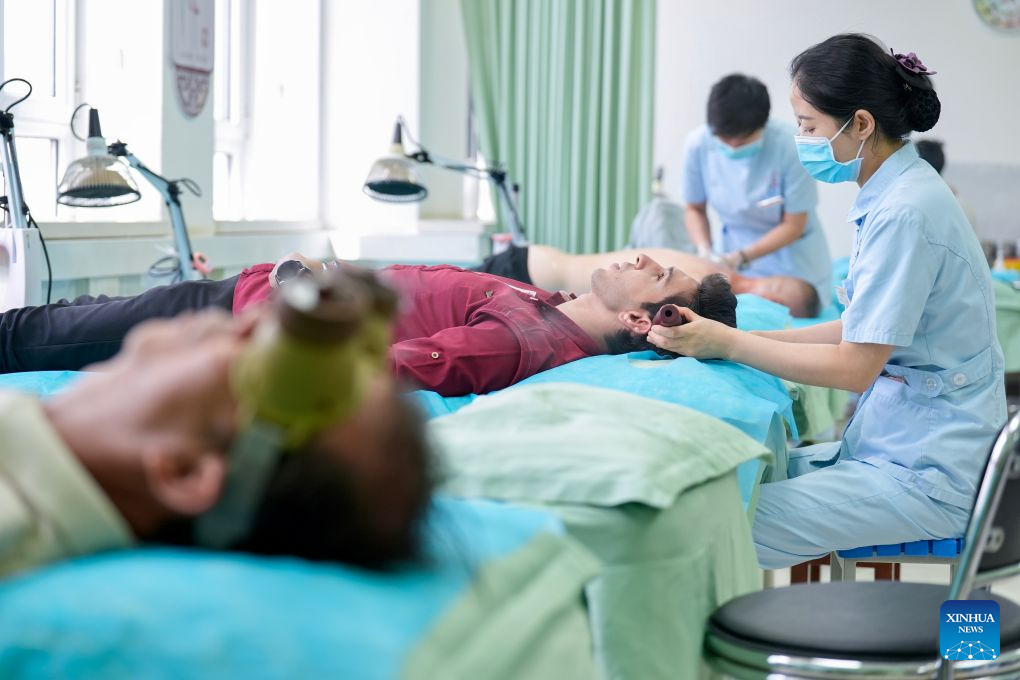
Mohammad Abdi experiences a traditional Chinese medical treatment therapy on head at Ningxia Chinese Medicine Research Center in Yinchuan, northwest China's Ningxia Hui Autonomous Region, on Aug. 15, 2026. (Xinhua/Yang Zhisen)
    Mohammad Abdi experiences a traditional Chinese medical treatment therapy on head at Ningxia Chinese Medicine Research Center in Yinchuan, northwest China's Ningxia Hui Autonomous Region, on Aug. 15, 2026. (Xinhua/Yang Zhisen)
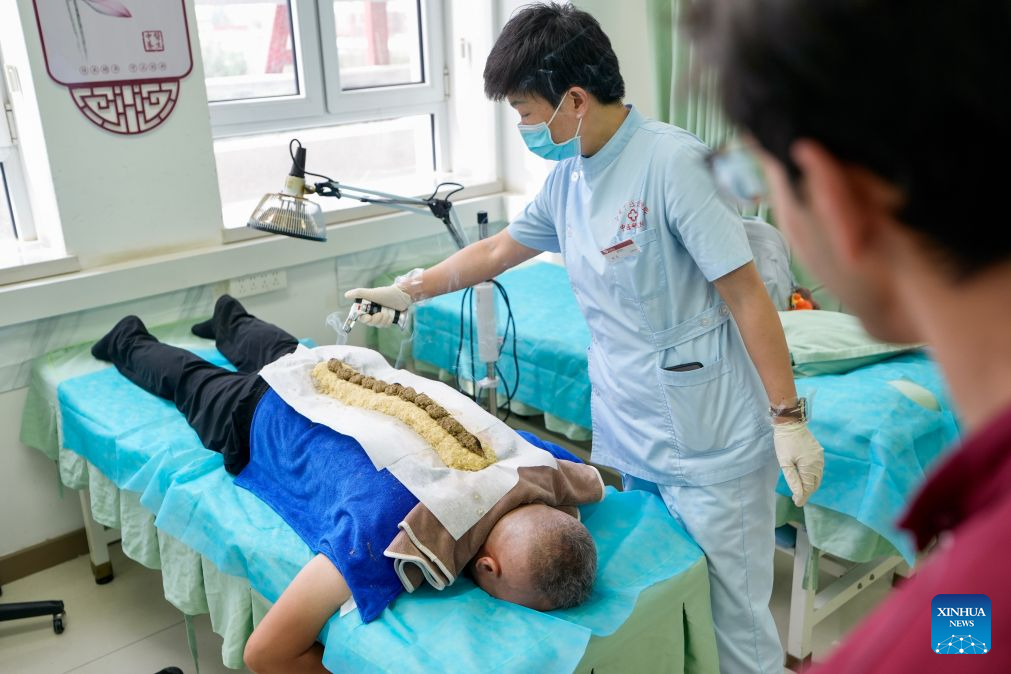
Mohammad Abdi learns about a traditional Chinese medical treatment therapy at Ningxia Chinese Medicine Research Center in Yinchuan, northwest China's Ningxia Hui Autonomous Region, on Aug. 15, 2026. (Xinhua/Yang Zhisen)
    Mohammad Abdi learns about a traditional Chinese medical treatment therapy at Ningxia Chinese Medicine Research Center in Yinchuan, northwest China's Ningxia Hui Autonomous Region, on Aug. 15, 2026. (Xinhua/Yang Zhisen)
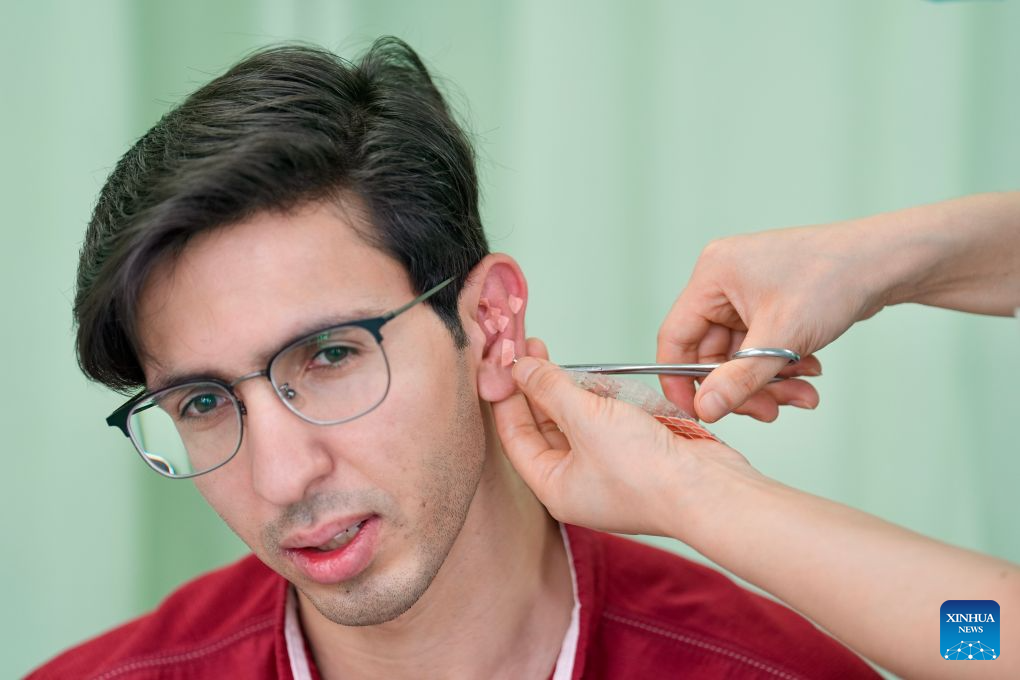
Mohammad Abdi experiences a traditional Chinese medical treatment on ears at Ningxia Chinese Medicine Research Center in Yinchuan, northwest China's Ningxia Hui Autonomous Region, on Aug. 15, 2026. (Xinhua/Yang Zhisen)
    Mohammad Abdi experiences a traditional Chinese medical treatment on ears at Ningxia Chinese Medicine Research Center in Yinchuan, northwest China's Ningxia Hui Autonomous Region, on Aug. 15, 2026. (Xinhua/Yang Zhisen)

Current article:http://www.laojiusidaosenleliao.bond/13d695y/bnrj.xlsx

Published on:14:50:29


------分隔线----------------------------